
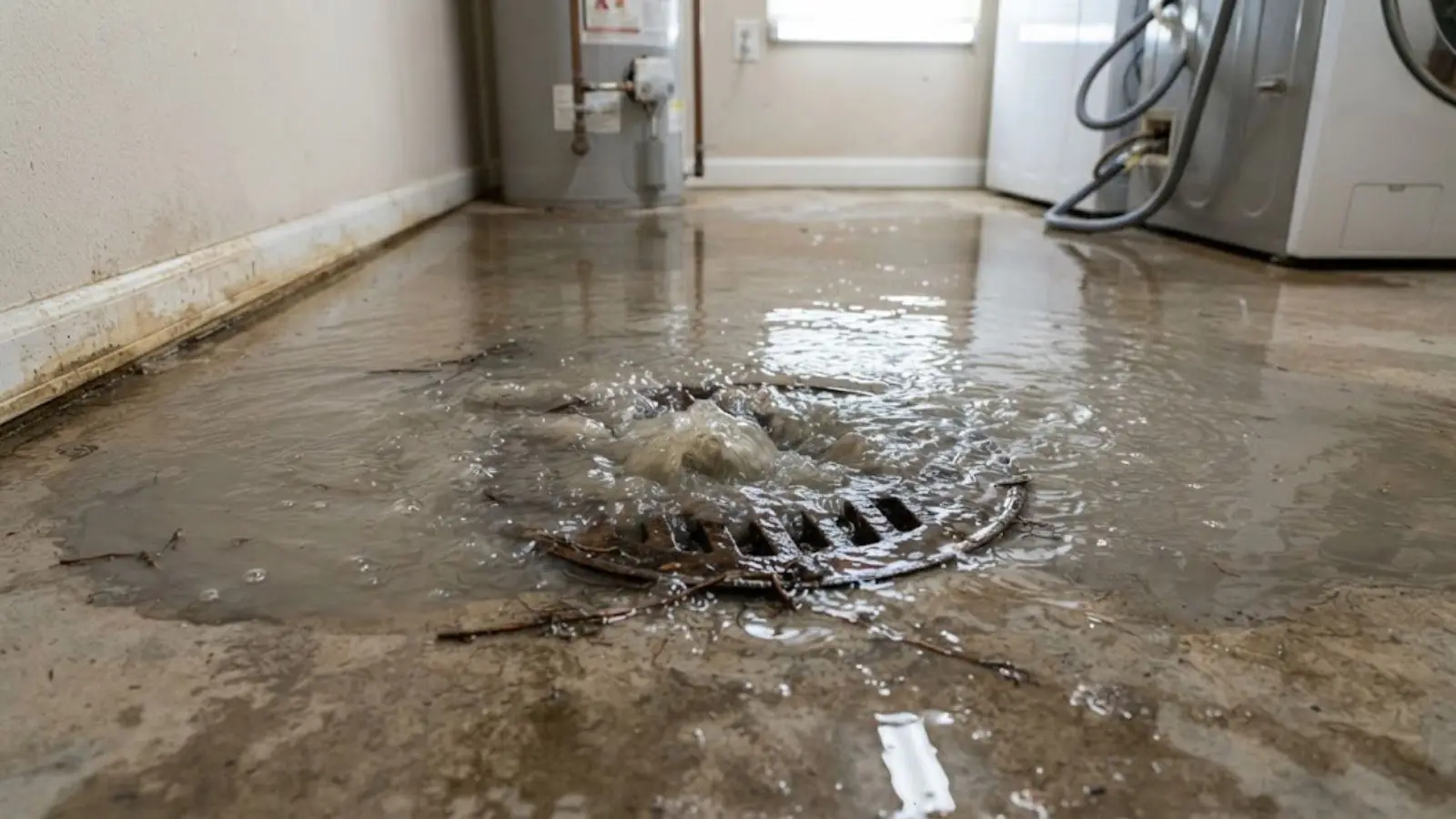
The first hour
Do these in order.
Safety
Do not wade near the panel or outlets. If water is rising toward them, stay out and call the utility or an electrician.
Stop water use
No flushing, laundry or dishwasher, in case the sewer is full.
Look at the water
Clear, dirty or sewage-smelling water points to different sources.
Lift and document
Move what you can above the water line and photograph everything.
Call
Call a plumber for pump or sewer trouble, and your insurer to report.
Three causes, three answers
Basement water usually comes from groundwater, a sewer backup or a plumbing leak, and the fix differs.
| Source | Clues | First move |
|---|---|---|
| Groundwater | Seeps at the wall or floor joint, clear water, after rain | Check sump pump, then drainage |
| Sewer backup | Rises from the floor drain, dirty, smells | Stop water use, call for a cable or jet |
| Plumbing leak | Near a pipe or heater, meter moves | Shut the main, call for leak detection |
If it is the sump pump
A pump that is not running is the most fixable cause. Check the plug and the breaker, and lift the float. A silent pump needs repair or replacement, and a battery backup protects against a power cut during a storm. See sump pump repair for the options.
If it is a sewer backup
Water coming up the floor drain means the main is blocked or overloaded. Do not use water and call. A cable or a jet clears a blockage, and a camera shows whether the line is damaged. See sewer line cleaning. If the backup follows heavy rain, the sewer may be overloaded, and no plumber can fix that from inside the house.
After the water is gone
Dry the space fast. Wet drywall and carpet grow mold within a couple of days, so pull wet carpet and open wet walls. Throw away porous items that touched sewage water. Keep photos, a list of damaged items and receipts. For chronic seepage, see basement waterproofing.
Insurance and what it usually covers
Policies differ, and flood, sewer backup and groundwater seepage are often covered separately from a burst pipe. Call your agent early and ask exactly what is included. Do not assume. A plumber's written description of the cause helps your claim.
Mold timelines and drying
Mold can start growing within one to two days in damp materials. Fans and dehumidifiers help once standing water is gone. Wet drywall that stays wet should be removed and not painted over. If the water was sewage, porous materials such as carpet and insulation are discarded rather than dried.
Cleaning up after sewer water
Sewage water carries bacteria. Wear gloves and boots, avoid touching your face and wash hands after. Hard surfaces can be cleaned and disinfected. Do not run a household vacuum on wet floors, and do not mix cleaning chemicals. If you are unsure, a restoration contractor is the right call.
Prevention checklist
These steps reduce the odds of a repeat.
- Test the sump pump and float each season.
- Install a battery or water-powered backup for the pump.
- Keep gutters clear and downspouts discharging away from the foundation.
- Ask a plumber whether a backwater valve suits your sewer lateral.
- Raise stored items off the floor.
- Know where your main water shutoff is.
Who to call
A plumber handles pumps, sewer and leaks. An electrician checks wet panels and outlets. A restoration company handles drying and mold. Your insurer opens a claim. Call each early, and keep a log of times and names. For help from us, our line is open 24/7.