
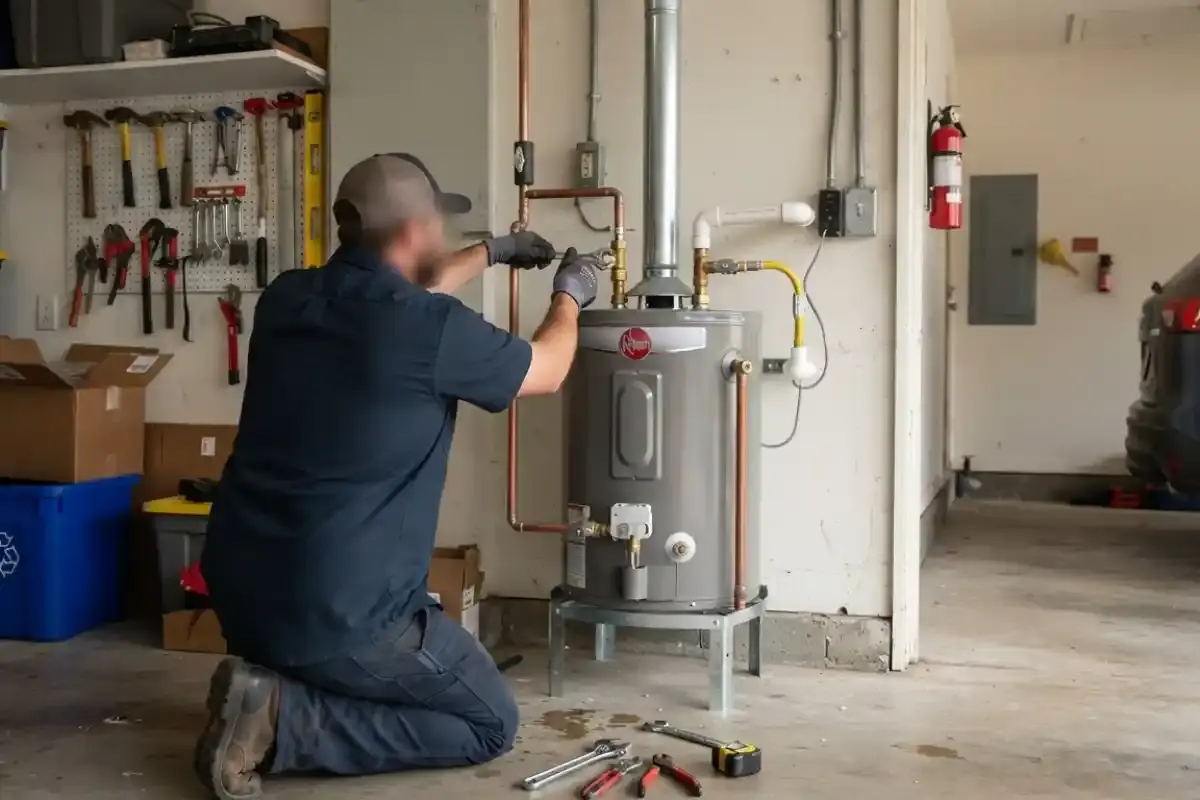
How to size a new water heater
Capacity depends on how many people use hot water at the same time, not only how many live in the home.
| Household | Typical tank |
|---|---|
| 1 to 2 people | 30 to 40 gallons |
| 3 to 4 people | 40 to 50 gallons |
| 5 or more, or heavy use | 50 to 80 gallons |
These are starting points. A home with a soaking tub or a second full bath at peak hours may want the next size up. We confirm after a short conversation, not by guess.
Fuel, venting and space
Three site conditions decide what can go where.
Gas
Needs a gas line, a shutoff and a vent. Chimney and direct-vent units differ.
Electric
Needs a dedicated circuit of the right size and a place to drain.
Closet or condo
Needs access, a drain pan and often building approval.
Basement
Needs a path for removal and a floor drain or pan.
What a complete installation includes
A good installation includes small parts that older systems skip.
- New shutoff valve and flexible connectors.
- Temperature and pressure relief valve with a discharge pipe.
- Expansion tank where the system calls for it.
- Drain pan with a drain where a leak would damage finished space.
- Gas leak test and vent check.
- Hot water temperature set and explained.
Planning a new water heater?
Call to book a visit. We size the unit and give a price before any work starts.
Tank, tankless or hybrid
A tank heater is the lowest upfront cost. A tankless unit saves space and delivers hot water continuously, but needs a larger gas line or a heavier electrical circuit and a descaling schedule. A hybrid heat pump unit cuts electric use but needs space and airflow. We explain the plumbing and electric changes before you choose, and we do not recommend an upgrade that your building cannot support.
If your heater has already failed, the replacement page covers the emergency path.
Installing in Secaucus
A lot of Secaucus housing is multi-unit, so an installation often starts with a call to the property manager. Ask about contractor rules, insurance requirements for work in the building and whether a shutoff is needed for the riser. In Harmon Cove, which was developed in the 1970s, buildings have central risers and shared walls, which affects when water can be shut off.
Permit rules vary, so ask the Secaucus construction department whether your installation needs a permit. The department is at the Town Hall Annex, 20 Centre Avenue. The water your heater sees affects its life. Ask your water utility for its annual water quality report, or test your tap.
What affects the cost of installation
The price covers the unit, the parts and the labor, and it is quoted in full.
Insurance note: homeowners policies usually respond to sudden, accidental water damage, and usually exclude the repair of the worn part or a slow leak that went on for months. Check your policy or ask your agent before you assume either way.
Tell us the size, fuel and location when you call for a firm quote.
Code and permits for a new installation
A new water heater location, a new gas line or a changed vent path is a bigger job than a like-for-like swap, and it is covered by the National Standard Plumbing Code, 2021 edition, which New Jersey adopts as its plumbing subcode in N.J.A.C. 5:23-3.15. Permit rules vary, so ask the Secaucus construction department before anything is cut. We tell you what we expect on the phone.
Questions about water heater installation
A straight swap takes a few hours. Moving the heater, changing fuel or adding venting takes longer.
A rough guide is 40 gallons for one to two people and 50 gallons for three to four. We size by peak use.
Yes, if venting, gas or power and drainage can reach the new spot. We confirm before quoting.
Yes.
It can be, if your gas line and venting support it and you value space and continuous hot water. It has higher upfront cost and needs periodic descaling.
Not sure which fix fits? Call (551) 249-3045 and describe what you see.