
Water heater emergency: what to do first when it leaks
A tank that leaks from the body cannot be patched. A leak from a fitting or relief valve may be repairable, so shutting things off and looking matters.
- Turn off the gas control or flip the breaker so the unit stops heating.
- Close the cold water supply valve on the pipe above the tank.
- Open a hot tap elsewhere in the house to relieve pressure.
- Move anything stored near the heater and mop standing water.
- Take a photo of the data plate and the leak for your insurer.
Repair or replace: a simple test
Age and leak location decide this. Tank heaters commonly run out of life somewhere around ten to fifteen years, depending on use and water conditions.
| What you see | Usually means |
|---|---|
| Water seeping from the tank body or bottom | Replace. The tank has corroded through. |
| Leak at a pipe fitting or the relief valve | Often repairable if the tank is sound. |
| No hot water, unit over ten years old | Replace if the repair cost nears a new unit. |
| Rusty hot water only | Anode rod or tank corrosion. Check age first. |
| Pilot out or ignition failure on a young unit | Repair. See water heater repair. |
If repair is the better value we say so. A new heater is not always the answer, and the repair page explains what we check first.
Choosing the right replacement
Size, fuel and venting are the three decisions. A household of one or two people usually does well with a 40-gallon tank, three to four with 50, and larger families or heavy use may want more. Keep the same fuel unless you are ready to run new gas or electric lines. Venting matters: a unit that vents through a chimney has different requirements from one that vents out a wall.
If you want to compare a tank with a tankless unit, we explain the plumbing and gas changes before you decide. Planned work with more choices is on the installation page.
Water heater down right now?
Call the 24/7 line. Tell us the unit's age, fuel and where it sits, and we can plan the swap.
What a replacement visit includes
We aim for one visit.
Shut down and drain
Gas or power off, water off, tank drained safely.
Remove
The old unit is disconnected and hauled away.
Set and connect
New tank, flex or hard lines, shutoff valve, relief valve and discharge pipe.
Vent and test
Gas lines checked for leaks, venting confirmed, temperature set.
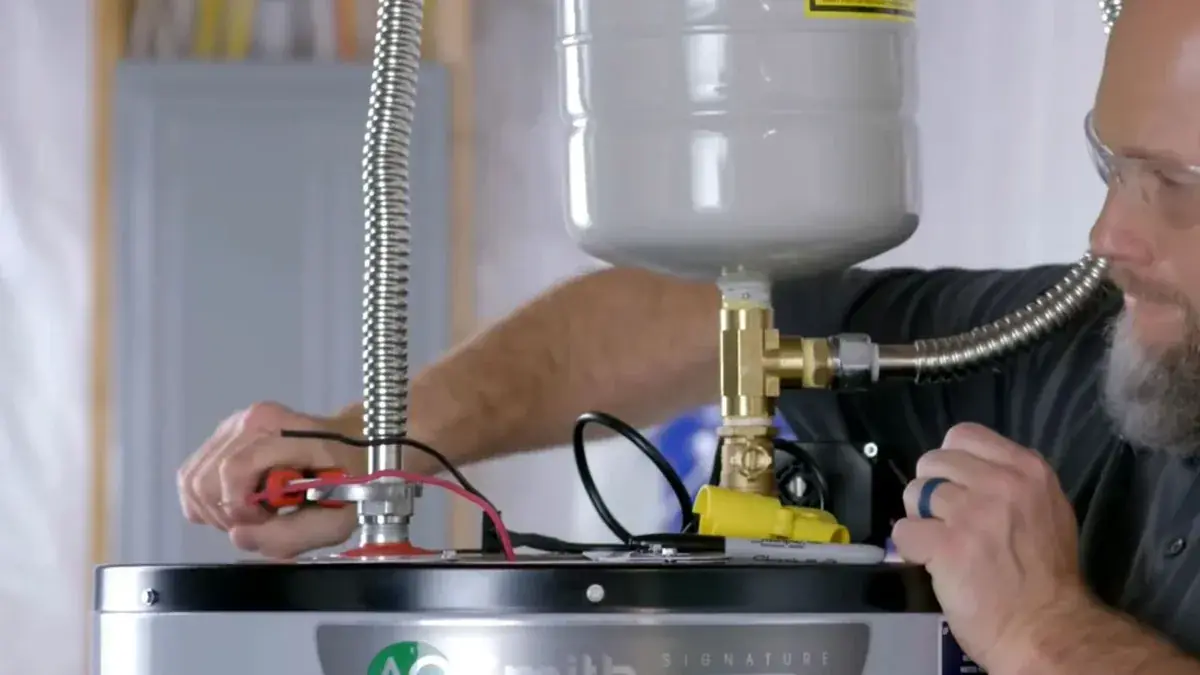
We also look at the pan, the expansion tank and the shutoff valves, since those older parts often fail soon after a new heater goes in.
Water heaters in Secaucus homes and condos
Many Secaucus residents live in condominiums and townhouses, including Harmon Cove, which was developed in the 1970s as townhouses and high-rise buildings. A heater in a closet or utility space may need a drain pan and a clear path for removal, and building rules may require notice or approved contractors. Check with your management office before the day.
Permit rules vary, so ask the Secaucus construction department whether a water heater swap at your address needs a permit. The department is at the Town Hall Annex, 20 Centre Avenue. Water chemistry also affects tank life. Your water utility publishes an annual water quality report, and testing your own tap shows what the heater faces.
What affects the cost of a water heater replacement
We quote the whole job before starting.
Insurance note: homeowners policies usually respond to sudden, accidental water damage, and usually exclude the repair of the worn part or a slow leak that went on for months. Check your policy or ask your agent before you assume either way.
For a firm quote, tell the dispatcher the tank size, fuel and age.
The rules behind a water heater swap
Plumbing work in New Jersey follows the National Standard Plumbing Code, 2021 edition, which New Jersey adopts as its plumbing subcode in N.J.A.C. 5:23-3.15. Relief valve piping, venting and gas connections all fall under that code, and the local construction office enforces it. This is a statement about the rules we work to, not about any badge or certificate. Ask the Secaucus construction department at (201) 330-2027 whether your swap needs a permit.
Questions about water heater replacement in Secaucus
Yes. Dispatch is open 24/7. If the tank is leaking at night, shut off the water and gas or power, then call. We book the earliest replacement slot available.
Most straightforward tank swaps take a few hours. Changes to venting, gas lines or electrical circuits take longer.
A leak from the tank body means the steel has corroded through, so replacement is the only fix. A leaking fitting may be repairable.
Yes. The old unit is disconnected, drained and hauled away as part of the replacement.
Permit rules vary, so ask the Secaucus construction department for your address. We tell you what we expect on the job.
Yes, including North Bergen and Lyndhurst, plus Jersey City and Rutherford.
Not sure which fix fits? Call (551) 249-3045 and describe what you see.