
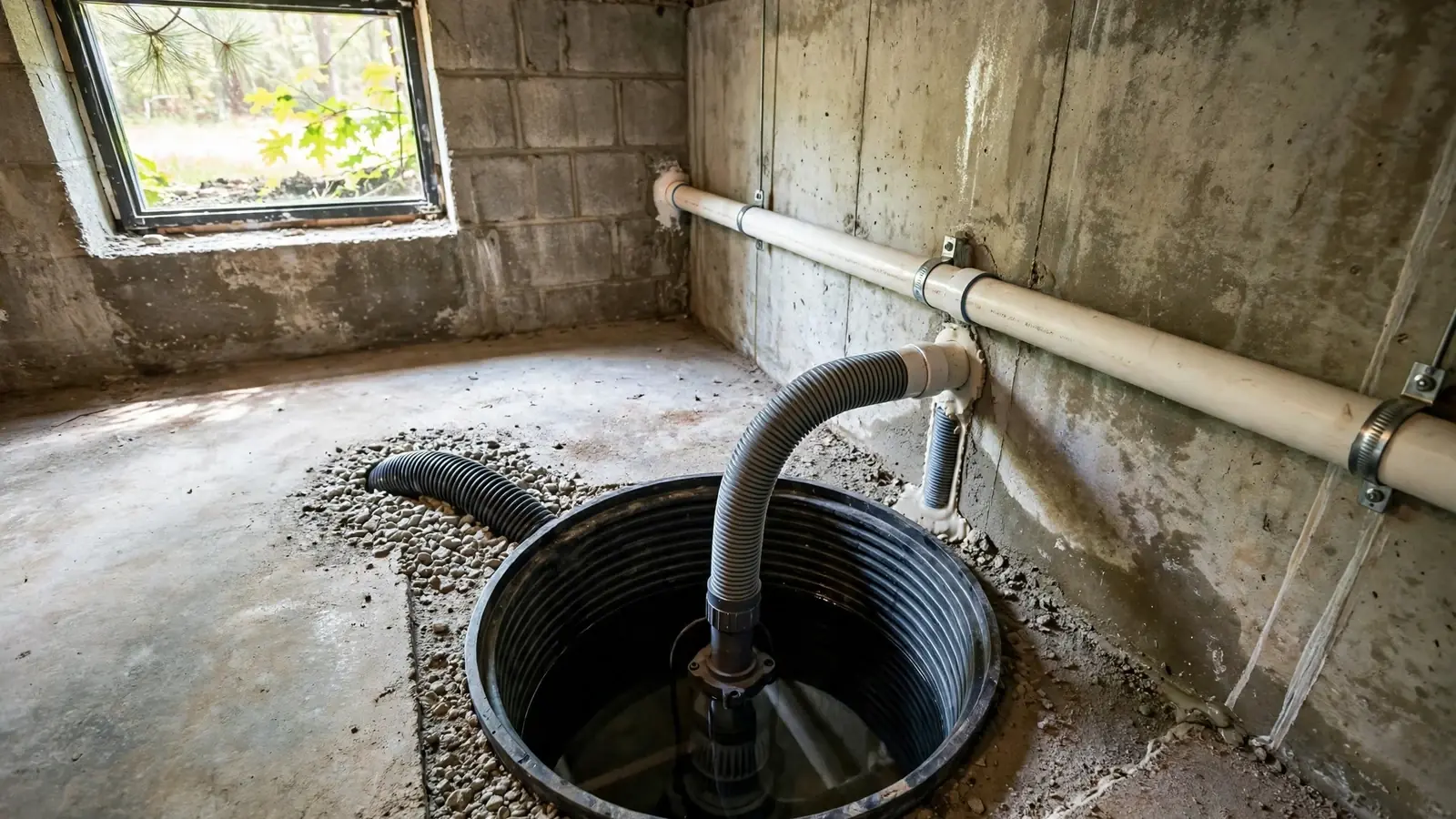
How the system works
Water collects in a pit, a float rises, the pump starts and pushes water up a discharge pipe and out of the house. A check valve in the pipe keeps water from flowing back into the pit when the pump stops. Without the check valve, the pump cycles constantly and wears out.
Where the discharge should go
Water must end up far enough from the foundation that it does not soak back in. Many installers run the pipe at least ten feet from the wall and onto ground that slopes away. A discharge onto a sidewalk, a neighbor's yard or into the sanitary sewer can cause problems and may be restricted, so ask the local building department what is allowed.
Pit, pump and backup choices
Match the equipment to the water.
| Choice | Good for | Watch for |
|---|---|---|
| Submersible pump | Quiet operation, handles more water | Harder to service |
| Pedestal pump | Easy service | Louder, motor above the pit |
| Battery backup | Storms with power loss | Battery needs testing and replacement |
| Water-powered backup | No battery needed | Needs sufficient municipal water pressure |
Freeze protection
A discharge pipe that exits the wall and runs along the ground can freeze in a cold snap. A frozen pipe sends water back into the pit and floods the basement. Use a pipe that slopes continuously, an open end that drains fully, and an extension with a freeze-relief opening where possible. Insulating the first stretch helps.
Electrical and safety
The pump needs a dedicated outlet protected by a ground-fault device in most cases, and wiring in a wet basement should be done by a licensed electrician. A pump cord should not be run across a wet floor, and the outlet should be above the likely flood line.
A planning checklist
Bring these questions to any installer.
- Where will the discharge exit and where does it end?
- Does the quote include a check valve and a battery backup?
- How will the pipe be protected from freezing?
- What size pit and liner does the job need?
- Who handles the electrical connection?
- How is the old pump removed and disposed of?
When the pump is the wrong fix
A sump pump cannot stop a sewer backup, and it does not help water that comes from a plumbing leak. If water appears at the floor drain or the meter moves with everything off, the answer is different. See sump pump repair for pump trouble and basement waterproofing for chronic seepage.
Testing and maintenance
Pour a bucket of water into the pit every season and watch the pump start, run and shut off. Clean the intake screen if the pump has one. Test the backup too. A pump that is never tested often fails the first time it is truly needed.
Sizing the pump
Pump size depends on how fast water enters the pit, and on how high the pump must lift it. A one-third horsepower unit handles many homes, while a wetter site may need one-half horsepower or a second pump. A pump that is too large cycles on and off in short bursts and wears out early. One that is too small cannot keep up in a storm, which is exactly when you need it.
Pit liner, lid and sealing
The pit should have a sturdy liner with a gravel base below it, so water can enter freely, and a tight lid so that damp air and radon gas do not rise into the house. A sealed lid also keeps children and pets out of the pit. Ask for a lid with grommets for the discharge pipe and the cord.
Alarms and monitoring
A high-water alarm costs little and gives early warning if the pump fails or the power goes out. Some models send an alert to a phone. If you travel in the wet season, an alarm with remote notice can be the difference between a damp floor and a ruined basement.
What happens during installation
A typical job cuts a hole in the slab, sets the liner, runs the discharge through the rim joist or wall and seals the opening. The work can take most of a day, with noise and dust. The crew should lay the discharge on a slope, fit the check valve in an accessible place and test the pump with water before they leave.