
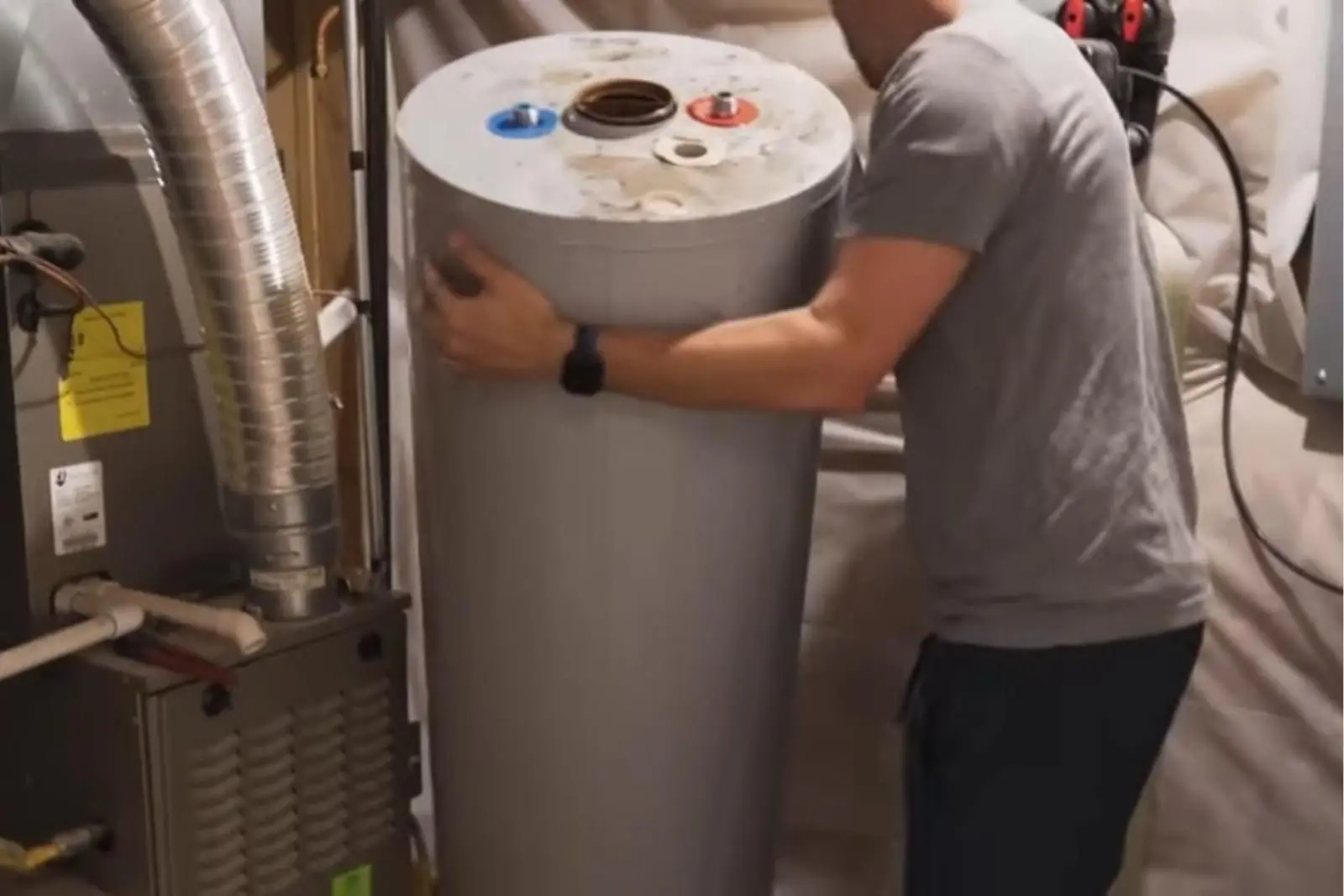
Signs it is time to replace
The tank is the problem when you see water at the base, rust-colored hot water, or a unit older than about a dozen years with repeated repairs. A leak from the tank body cannot be fixed. For a smaller fault, see water heater repair first.
The replacement day, step by step
Know the order so you can ask good questions.
Shut off
Gas control off, cold supply closed, tank drained.
Disconnect
Gas line, water lines and vent separated from the old unit.
Set the new tank
Level, on a pan where needed, with the relief valve and discharge pipe installed.
Connect and vent
New connectors, gas line tested for leaks, vent checked for draft.
Fire and test
Burner lit, temperature set, flame and venting confirmed.
Size and efficiency
A 40-gallon tank suits one or two people. Three or four usually want 50 gallons. Higher recovery models heat faster and help when many people shower in a short window. Efficiency labels tell you how much gas it uses to heat water, and a more efficient unit costs more up front. Ask the installer to show the numbers for the model they quote.
Venting: where installs go wrong
Gas water heaters must vent combustion gases outside. A unit venting up a chimney needs a liner of the right size. A power-vent or direct-vent unit goes through a wall with plastic or metal pipe. If the new unit has different venting from the old one, the installer should say so and price it before work starts.
The small parts that matter
Ask that the quote includes a new gas connector, a new shutoff valve, a relief valve and discharge pipe, and an expansion tank where your system calls for one. A drain pan under a heater in finished space can save a ceiling. Reusing old connectors is tempting and a poor idea.
Safety if you smell gas
If you smell gas at any time, leave the building and call the gas utility or 911 first. Do not turn lights or switches on or off. We do not promise a response time for gas leaks, and we ask you to put safety first. After the utility clears the building, we can make the repair.
Gas, tankless or electric
If your gas line and venting allow, a tankless unit saves space. If you are weighing the options before the tank fails, see water heater installation.
Temperature and scald protection
Water at 140 degrees can scald in seconds. Many households set the heater near 120 degrees, which is hot enough for most uses and lowers scald risk. Homes with children or older adults may want a thermostatic mixing valve at the heater, which blends cold water in to cap the temperature at the taps.
Anode rods and flushing
A tank has a sacrificial anode rod that corrodes in place of the steel. Checking it every few years and flushing sediment from the bottom of the tank extends the life of the heater. A new unit with a neglected rod may last no longer than the old one, so ask your installer about a maintenance schedule.
What happens to the old heater
The old unit is drained, disconnected and carried out. Ask that haul-away is part of the quote. A tank that sat in a closet for twenty years may leave a rust ring on the floor, and the installer should tell you if the floor needs attention.
Before the plumber arrives
A short preparation helps the day go quickly.
- Clear a path to the heater and a few feet around it.
- Know where your gas shutoff and main water shutoff are.
- Tell the building office if you live in a condo.
- Plan for an hour or two without hot water.
- Photograph the data plate for your records.